Er a Pickleball pickleball classes: FAQs and Guidance
Picking up pickleball at Era Pickleball is more than learning strokes. It’s a doorway to a community, a path to better movement, and a chance to align technique with a game that rewards precision and patience as much as speed. Over years of coaching and watching players of all ages slide into the sport, I’ve learned that the right guidance can transform a hesitant beginner into a confident participant who shows up ready to work. The FAQs below reflect real-world questions players ask on the court, in the lobby, and in the car after a practice. They’re paired with practical guidance drawn from field experience, not marketing brochures.
How Era Pickleball classes are structured
Era Pickleball classes sit on a spectrum. You can expect a well-timed mix of drills, live play, and feedback loops that respect both a player’s current level and their aspirations. A typical session begins with a short warmup—swinging the arms, light footwork patterns, perhaps a few shoulder stretches to prepare for the workout ahead. Then we move into technique blocks. These blocks are designed so that you can leave the court with a tangible improvement you can test in your next league night or friendly match.
The coaches bring a simple philosophy to the floor: small, deliberate changes compound into real performance gains. If you want to work on your forehand drive, the class might slow down the motion, align your stance, and guide you through a sequence that builds muscle memory. If you’re here for the mental game, there’s room for shot selection, risk assessment, and reading your opponent’s posture as the rally unfolds. The best moments in a typical Era Pickleball session often come not from the most spectacular shot, but from recognizing a pattern in your own play and interrupting it with a better option.
Coaching at Era Pickleball emphasizes movement efficiency. Players who move with purpose conserve energy for the late game and reduce the risk of injury. This is especially valuable for beginners who might push too hard early on or for intermediate players who carry a residual habit from other racquet sports. The coaching staff uses video review selectively—short clips that illustrate a single concept rather than a broad critique. The aim is clarity, not embarrassment, and the best learning often comes from watching a correctly executed version of your own imperfect shot.
FAQs about pacing, enrollment, and progression
One of the most common questions is how fast one should expect to progress. The pace isn’t a universal measure; it depends on prior athletic background, time devoted to practice, and how well you absorb feedback. Some players notice a noticeable improvement after four to six sessions, while others experience a slower but steadier arc that culminates in an appreciable difference in match play after a couple of months. There is value in steady progress. It builds confidence and reduces the likelihood of overreaching, a pitfall for players who haste the learning process.
Another frequent question concerns equipment. The shorts version goes like this: you don’t need to buy the most expensive paddle immediately. Era Pickleball classes assume a baseline kit that allows you to learn without distraction. Paddle weight is a personal preference, but most beginners benefit from a mid-weight paddle that offers a balance of control and pop. If you already own a paddle, bring it to class so the coach can assess your grip, your paddle face angle, and how your stroke translates into actual ball contact. Footwear matters too. Non-marking court shoes with a stable sole will help you feel grounded, especially during lateral movement patterns that are core to good pickleball technique.
Enrollment is straightforward, yet people still ask about cancellations and makeup sessions. The policy at Era Pickleball is designed to be clear and fair. If you’re unable to attend a scheduled class, most locations offer a flexible make-up window within the same week or a future class with a simple swap. The aim is to keep you on the learning curve without penalizing you for life’s interruptions. You’ll often hear coaches remind players that consistency outpaces intensity. Even a moderate weekly commitment can deliver noticeable results over time, particularly when paired with light at-home practice designed to reinforce what you learn on the court.
What about private sessions versus group classes? If you thrive on individualized feedback, private coaching can accelerate certain aspects of your game. The private format makes it possible to zoom in on your specific grip, stance, or serve accuracy and tailor drills that fit your schedule. Group classes, by contrast, pay off in competitive comfort. They create a social incentive to show up, which matters in a sport that rewards routine practice and a willingness to listen to coaching while you’re playing with others.
The core coaching philosophy behind Era Pickleball
Coaching at Era Pickleball rests on three pillars: biomechanical soundness, tactical clarity, and sustainable practice. The biomechanical goal is to help players find efficient body mechanics that reduce strain and increase consistency. Many beginners arrive with a reliance on arm strength and wrist action. Coaches guide them toward coordinated movement that leverages hip rotation, stable shoulders, and a relaxed grip. The aim is to translate fast reflexes into reliable shotmaking by means of controlled technique rather than brute force.
Tactically, Era Pickleball coaching emphasizes shot selection and court sense. Pickleball is a game of inches and timing more than raw speed. Ineffective shot choices—the low-percentage resets that become habitual—cost energy and yield easy points for the opponent. A typical session includes drills that simulate match situations: a two-shot pressure move followed by a quick transition to the net, or a long dink exchange that tests patience and pace. The coaches encourage players to read trends in the rally, notice patterns in how opponents respond, and adjust strategies accordingly.
Sustainability in practice means balance. Players who burn out or risk injury by overdoing it are not fulfilling the promise of a long-term hobby or sport. Era Pickleball coaching integrates recovery fundamentals into the program. You’ll find guidance on dynamic stretching to unwind tightened hips after a day of work, on hydration strategies that support performance, and on sleep routines that promote learning and memory consolidation for new skills.
Real-world testimonials and what they reveal
I’ve watched players who came into Era Pickleball classes with some fear about their balance or their backhand and who left with a smile and a set of practical habits they could carry into their league nights. One mother of two described her first month as a roller coaster of small wins and a few frustrating moments. She started with hesitant dink shots, then gradually learned to slow down her motion, keep her paddle in front of her body, and trust the process. It wasn’t about becoming a heat-seeking ace; it was about becoming someone who could enjoy the game without a constant fear of errors.
Another player, a former tennis hobbyist, learned to translate a service motion into the pickleball serve without chasing the ball. The tempo of the stroke needed to shift from a tennis-style acceleration to a controlled, crisp contact that lands in the service box. The shift required a mental adjustment as much as a physical one. It included recalibrating footwork so the weight stayed centered, so the paddle could swing with the body rather than fighting against it. That kind of reframing often emerges in Era Pickleball classes through gentle corrections and reinforced habits.
There are also more practical examples that show how the program adapts to varied goals. A retiree who joined to stay active found that the conditioning help was just as valuable as the technique coaching. A high school athlete seeking college-level competition discovered that the European-style emphasis on control and placement paid off when compared to mere raw power. Across these experiences, one refrain remains constant: the real benefits come from steady attendance, honest feedback, and a willingness to experiment with new techniques in a supportive environment.
What to expect in the studio or on the court
The environment at Era Pickleball is designed to be challenging yet approachable. The coaching staff knows that new players sometimes feel overwhelmed by the court’s rhythm. A good rule of thumb is to arrive with curiosity, not preconceptions. If you want to improve your serve, you’ll be guided through a progression that starts with stance and ball toss, then moves to contact point and follow-through. The coach will emphasize a consistent toss and a compact motion, helping you build a serve that’s reliable under pressure rather than flashy.
Drills tend to rotate so that no two sessions feel exactly the same. You might spend a block on net play, practicing quick exchanges with a partner while your partner’s return is varied. Then you might switch to baseline depth control, working on how far you advance within the court lines to avoid giving your opponent a clear target. The emphasis is always on making meaningful adjustments that you can test in a real rally. The aim is not to perfect a single shot in isolation but to knit your shots into an adaptable kit you can use across court positions.
If you’re thinking about speed versus precision, the coaches have a clear message: precision first, speed second. When you learn to place the shot with confidence, the rally becomes less about brute speed and more about guessing correctly, positioning well, and using the court to your advantage. Speed follows from controlled technique, not the other way around. It’s a small but powerful distinction that changes how you approach every practice set.
Tips for new players who want to get the most from Era Pickleball
- Be candid with your coach about what you want to achieve. If you’re hoping to reach a certain level for a local league or your social group, share that objective. A coach can tailor drills toward that outcome and help you measure progress along the way.
- Focus on the fundamentals early. A lot of beginner frustration comes from trying to execute advanced shots before you have reliable balance, footwork, and contact. The simplest dink, a consistent serve, and a stable return can form the core of your improvement.
- Keep a practice log. Jot down what you tried, what felt off, and what you noticed during your next session. A minimal record helps you connect the dots between practice and performance.
- Embrace a routine outside the court. Short, purposeful practice sessions at home can reinforce what you learn on the court. Even five to ten minutes of focused groundstroke or footwork work several times a week yields dividends over time.
- Give yourself time to adapt. Pickleball uses a blend of reflex and strategy, and your brain needs some time to rewire old movement habits into new, more efficient patterns. Patience pays off with steadier strokes and better court sense.
Common concerns and how Era Pickleball addresses them
A frequent worry is whether players can learn as adults. The answer is yes, with the caveat that adults may require a slower, more deliberate pace than younger players. The human motor system has learned patterns over decades, and undoing less efficient habits takes time. Coaches at Era Pickleball acknowledge that and design sessions to be progressive, not punitive. The goal is steady advancement, with built-in checks to prevent frustration from turning into discouragement.
Another concern is the fear of looking inexperienced in front of peers. This is a natural response, but the culture inside Era Pickleball is supportive and constructive. Coaches model patient feedback, and group dynamics are steered toward collaboration rather than competition. You’ll often hear reminders that everyone begins somewhere, that progress is not a straight line, and that the best players on the court are the ones who stay curious and coachable.
Injury risk is a practical topic for many players who return to sport after an extended break. Era Pickleball emphasizes warmups that prime the joints for lateral movement and quick changes of direction. If you arrive with minor aches, the coaching staff will adapt a plan for that day rather than press you to push through discomfort. The emphasis on technique is not to punish your body but to protect it. A well-timed pause for rest can be a smart coaching choice that preserves long-term participation.
The two lists you might encounter in Era Pickleball programs
-
What a typical beginner might hope to gain in the first month:
-
Consistent service placement
-
Reliable dink reliability
-
Better net positioning
-
Improved court awareness
-
Reduced unforced errors
-
Elements that define a good coaching session:
-
Clear, action-oriented feedback
-
Drills that connect to match play
-
Short, repeatable sequences
-
A supportive tempo that respects fatigue
-
Practical takeaway that you can test in your next game
These lists illustrate the practical emphasis you’ll feel on the court. They are not simply bullet points but a reflection of what players actually experience during the initial weeks of Era Pickleball training and beyond. The first month is about carving out a consistent practice routine, while the ongoing sessions focus on translating improved mechanics into reliable performance during rallies.
A candid note about trade-offs and edge cases
No coaching program is perfect for every player. Era Pickleball is designed to be adaptable, but there are trade-offs to acknowledge. Some players thrive on a fast-paced, high-intensity drill sequence that pushes their rhythm and reaction times. Others perform best when the session slows down and emphasizes deliberate technique. The coaching staff calibrates the pace to the group while maintaining enough challenge to ensure growth. If you’re recovering from an injury, expect a modified path that prioritizes safe movement patterns and gradual load progression.
Edge cases are real in any sport. A player with a long athletic history might consolidate gains quickly, then want to push into higher-level strategy months earlier than peers. That is a legitimate pathway, but it requires ongoing communication with the coach to ensure technique remains robust as you ascend. Conversely, someone new to sports may need more time with the basics, and that is perfectly fine. The system is designed to accommodate different learning curves without compromising safety or long-term development.
How Era Pickleball classes connect to broader fitness goals
Pickleball is not an island sport. It complements general fitness by encouraging steady movement, balance training, and cognitive engagement through strategic thinking. The social component adds motivation to stay active, which has proven benefits for mood, sleep, and overall health. The Era Pickleball approach recognizes this interconnectedness. Sessions often include mobility work, posture checks, and gentle conditioning that supports everyday life—lifting a grandchild, hiking, or simply moving with less stiffness after a day at the desk.
Several players have found that the sport’s incremental skill-building translates into a sense of mastery in other activities. The hand-eye coordination sharpened on the court can improve reaction times in daily tasks. The endurance required for longer rallies can carry into other sports or recreational pursuits. For many, pickleball becomes a gateway to broader wellness rather than a stand-alone hobby.
Practical guidance for choosing the right Era Pickleball class
- Clarify your goals. Are you seeking social play, competitive improvement, or rehabilitation-friendly movement? Different class formats address those aims in distinct ways.
- Check the schedule and location. Availability matters as much as anything. The right class for you is the one that fits your weekly rhythm without becoming a tedious obligation.
- Listen to the climate of the session. Some cohorts thrive on a high-energy tone, while others perform best in an instructional setting that emphasizes technique. Find the environment that motivates you.
- Meet the coaching staff if possible. A brief conversation with a coach can reveal whether their approach aligns with your expectations and learning style.
- Be honest about your baseline. It helps the coach tailor the drills and choose a progression that matches where you are now and where you’d like to go.
The broader impact you can expect
If you commit to Era Pickleball classes with a long horizon in mind, you’ll likely see compound improvements across several areas. First, your ball control improves. The ball no longer seems to arrive at your paddle by accident. You develop a sense of tempo, a feel for the ball, and a better idea of where it will land after contact. Second, your court sense sharpens. You begin to anticipate rallies more accurately, cutting off angles and exploiting opportunities as they arise. Third, your confidence grows. The court stops feeling like a stage where you might fail and starts feeling like a space where you can learn, experiment, and adjust on the fly.
In practical terms, this translates into more consistent participation in leagues and social play. You’ll find yourself staying longer in rallies, selecting smarter shot choices, and moving with less hesitation. The cumulative effect is a measurable improvement that shows up in your match results, your ability to mentor newer players, and your own sense of enjoyment on the court.
A closer look at era pickleball training and coaching nuances
Era Pickleball training places emphasis on the continuity between practice and pickleball tournaments near me match play. The drills aren’t isolated exercises; they are designed to be transferable into the way you approach rallies and the kinds of decisions you make when you’re under pressure. The coaching staff tends to focus on the basics of contact, stance, and body alignment first because those elements, when solid, unlock better shotmaking across the board. Only after a reliable foundation is established do you begin integrating more complex variations. This measured progression helps practitioners avoid the common pitfall of trying to do too much too soon, a mistake that often leads to plateaus or injury.
A subtle but important component of Era Pickleball coaching is the way feedback is delivered. Coaches aim for precise, actionable guidance that respects the learner’s effort. They avoid overly broad critiques and instead target a single point per drill to maximize retention. You’ll hear phrases like, “watch the contact point,” or “adjust your weight transfer here,” followed by a quick demonstration. The practice then cycles back to the drill with those improvements in mind, creating a feedback loop that is tangible and repeatable.
The role of community and ongoing support
Beyond the physical mechanics, Era Pickleball classes are embedded in a social ecosystem. A strong community reinforces what you learn in the studio. Players swap tips after sessions, share warm-up ideas, and occasionally organize informal scrimmages that replicate real-game pressure in a low-stakes setting. This community aspect matters because it normalizes the learning journey. It makes it easier for players to accept early missteps as part of the process rather than as evidence of personal inadequacy. A robust community also expands your access to informal practice partners, which is often the fastest route to improvement outside of structured classes.
Coaches play a pivotal role in nurturing this community. They celebrate incremental wins, correct with empathy, and model sportsmanship on and off the court. Their leadership helps set a tone that makes players feel safe to push their boundaries. If you’ve ever hesitated to try a new serve or to challenge yourself with a tighter net game, you’ll know how meaningful this supportive environment can be.
A practical path forward for new enrollees
If you’re new to Era Pickleball and contemplating enrollment, consider a staged approach. Start with a fundamental class that focuses on grips, stance, and basic groundstrokes. Build toward a session that introduces net play and partner exchanges. When you feel comfortable with the core techniques, you can progress to more advanced drills that emphasize shot variety, placement, and reading your opponent’s patterns.
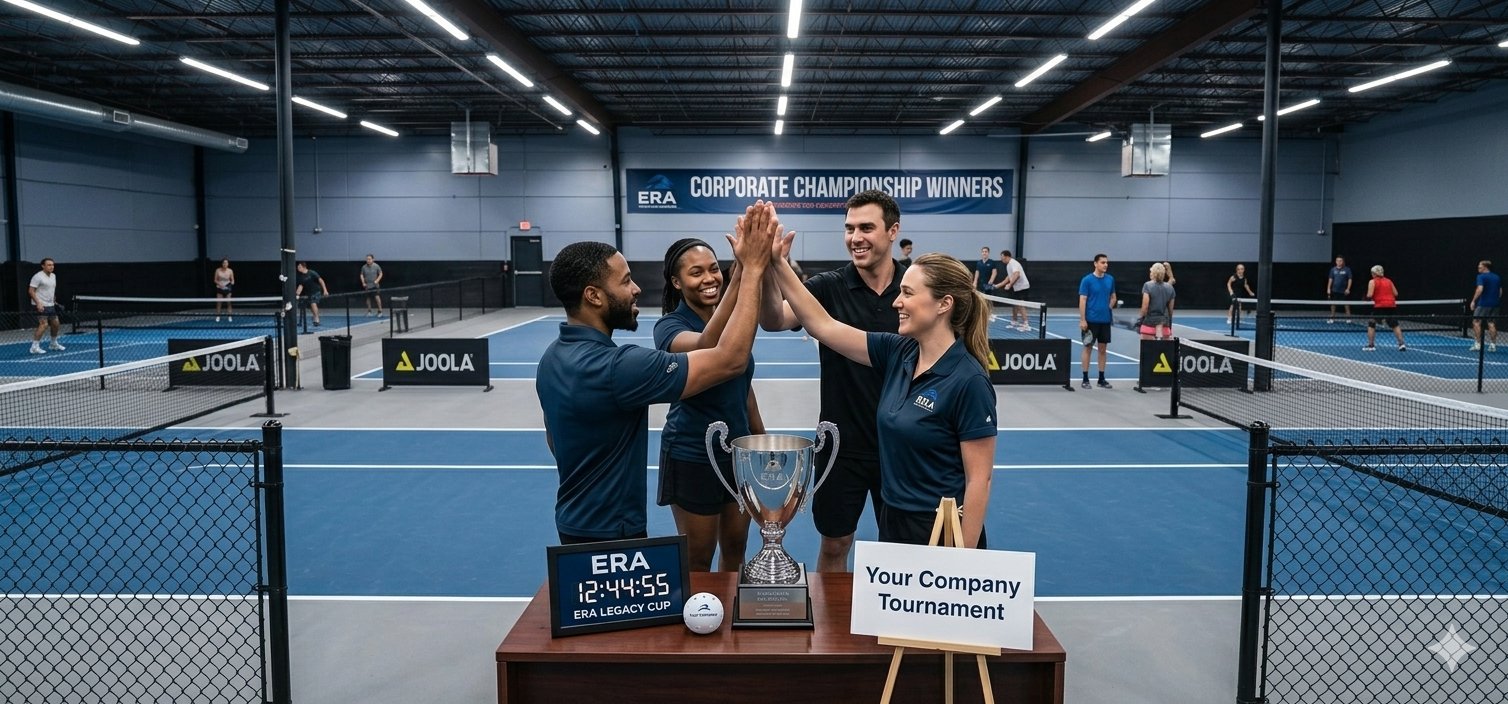
During the early weeks, it’s perfectly normal to feel a mix of curiosity and mild frustration. The key is to translate those feelings into consistent practice and honest feedback. Bring questions to the coaching staff. Ask about how a particular stance affects your reach, or how a small adjustment in your paddle angle can alter the ball’s trajectory. The willingness to ask and adapt is often the difference between a good experience and a truly transformative one.
Final reflections for prospective players
The promise of Era Pickleball pickleball classes lies in the combination of technique, strategy, and community. It is not a one-off workshop; it is a sustained program designed to turn novices into confident players who can contribute to a friendly, competitive environment. The path includes a steady cadence of practice, structured progression, and a culture of constructive feedback. It also invites you to bring your own goals to the table—whether you want to win a local league, keep fit, or simply enjoy a social pastime that happens to be good for your brain and heart.
If you’re exploring options for pickleball training, Era Pickleball offers more than a schedule of classes. It provides a framework for learning that respects your current level while challenging you to grow. The end result is not just better strokes or a sharper serve; it is a more confident you on the court, ready to handle the moment when the rally tightens and the score climbs.
And that is what great coaching should deliver: a practical, sustainable path to improvement you can trust, day in and day out. Whether you’re stepping onto the court for the first time or returning after a long break, Era Pickleball classes are built to meet you where you are and guide you toward where you want to be.